
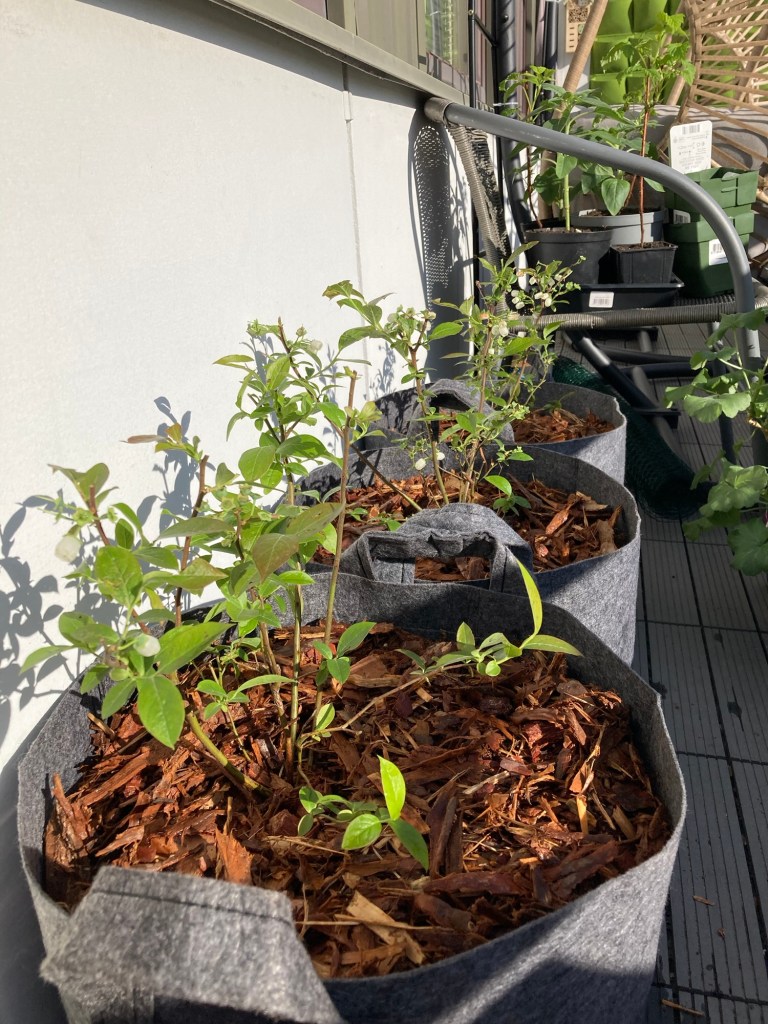
In 2023, my blueberry plants were tiny. I planted them in fabric pots on my open balcony in Finland and left them outdoors throughout the year.
Three Finnish winters later, after temperatures below −25°C, the plants are not only alive. In summer 2026, they produced their best crop so far.
So, can blueberries survive winter in fabric pots in a cold climate?
In my experience, yes. However, surviving winter is only part of the story. Sunlight, watering and soil acidity have also had a clear effect on the plants and their harvest.
Growing Blueberries in Fabric Pots
My blueberry plants have remained in their fabric pots since 2023. The pots stay on the balcony throughout both summer and winter instead of being moved into storage.
Fabric pots can dry relatively quickly during warm weather, especially on a sunny balcony. Regular watering has therefore been important.
I keep bark mulch on the surface of the soil. It helps slow down moisture loss during summer, and fallen leaves remain around the plants during autumn and winter.
How They Survived Finnish Winters
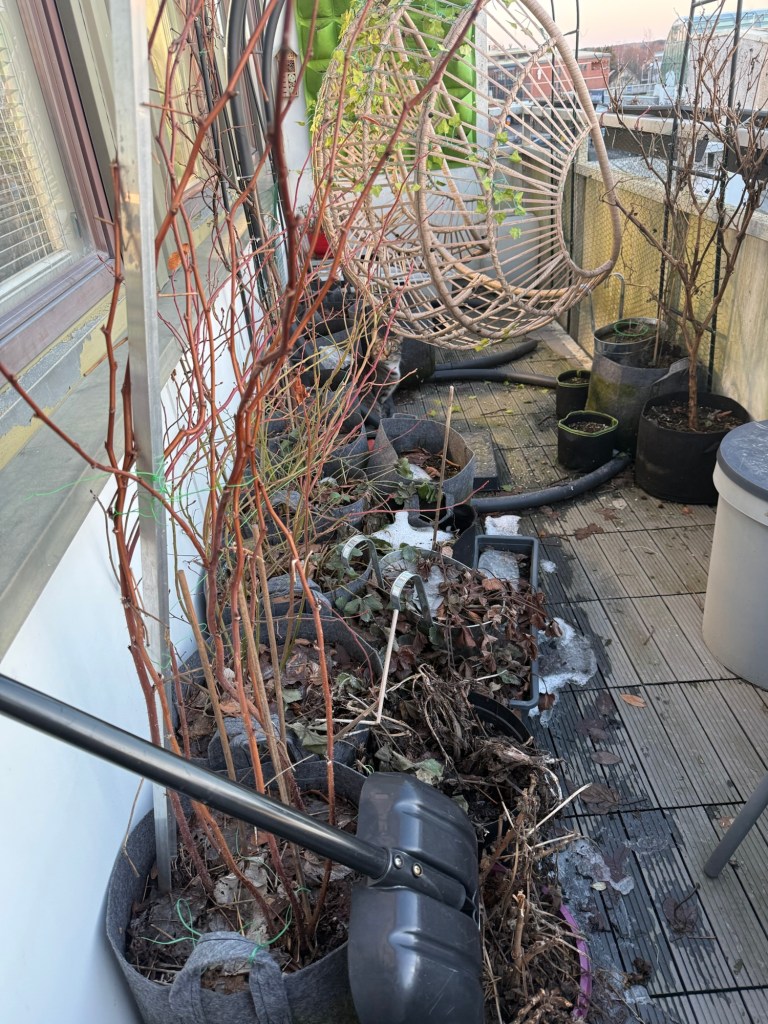
Most winters, I did not wrap the blueberry pots or move them indoors. During one particularly cold period, I added bubble wrap and breathable garden fabric around the containers.
The bark mulch and fallen leaves stayed on the surface of the soil. When there was enough snow, I also placed snow around the pots to provide additional insulation.
The plants remained outside and dormant until spring. All of them have now survived three winters in the same fabric pots.
This is my experience with these particular plants and balcony conditions. It does not mean that every blueberry variety will survive every winter in an exposed container.
The Results After Three Winters
The plants were very small when I planted them in 2023. Their first crops were limited, but production increased as the bushes became established.
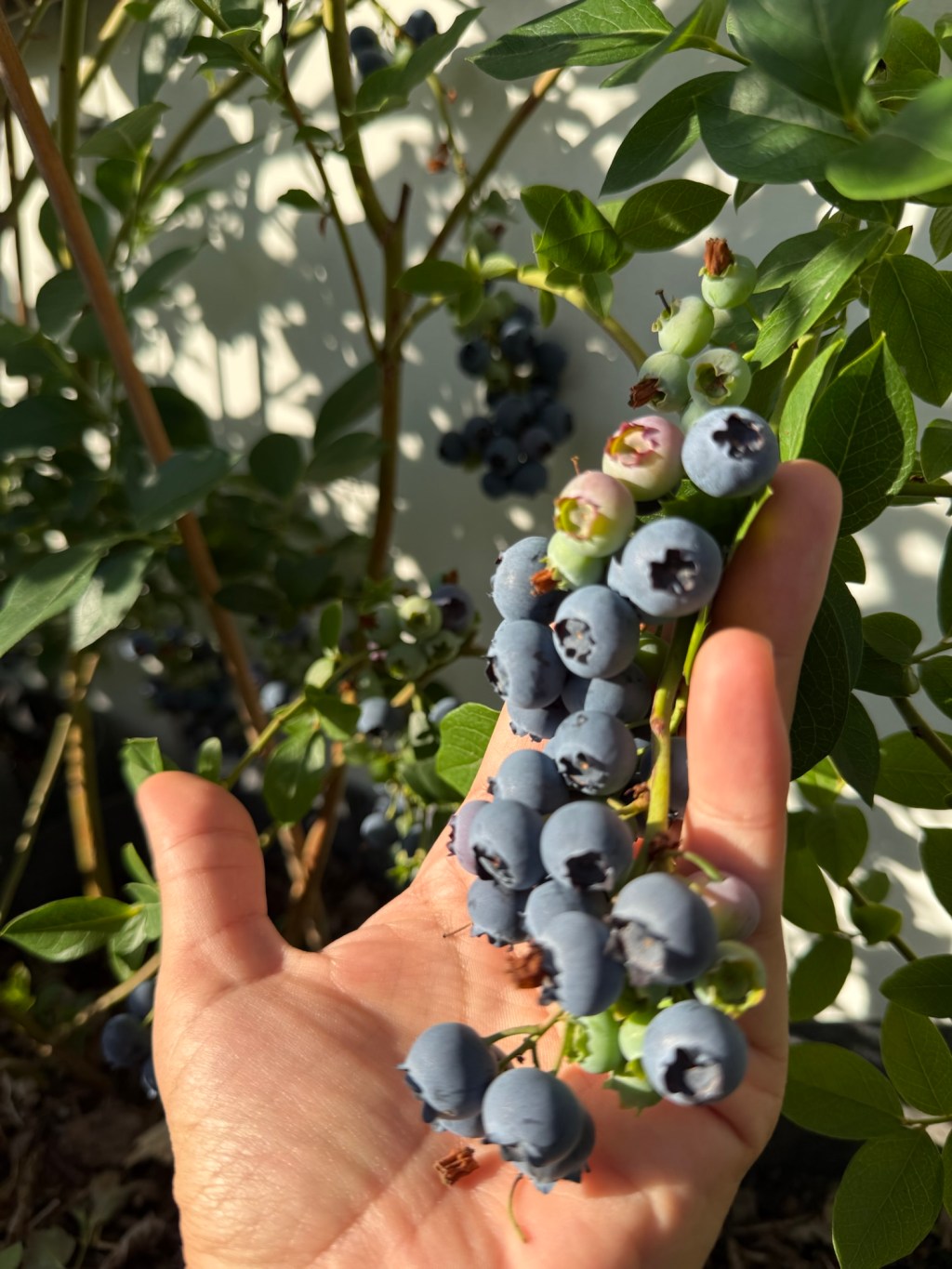
In summer 2026, two bushes in the sunnier part of the balcony developed a large number of berries. The berries ripened gradually rather than all at once.
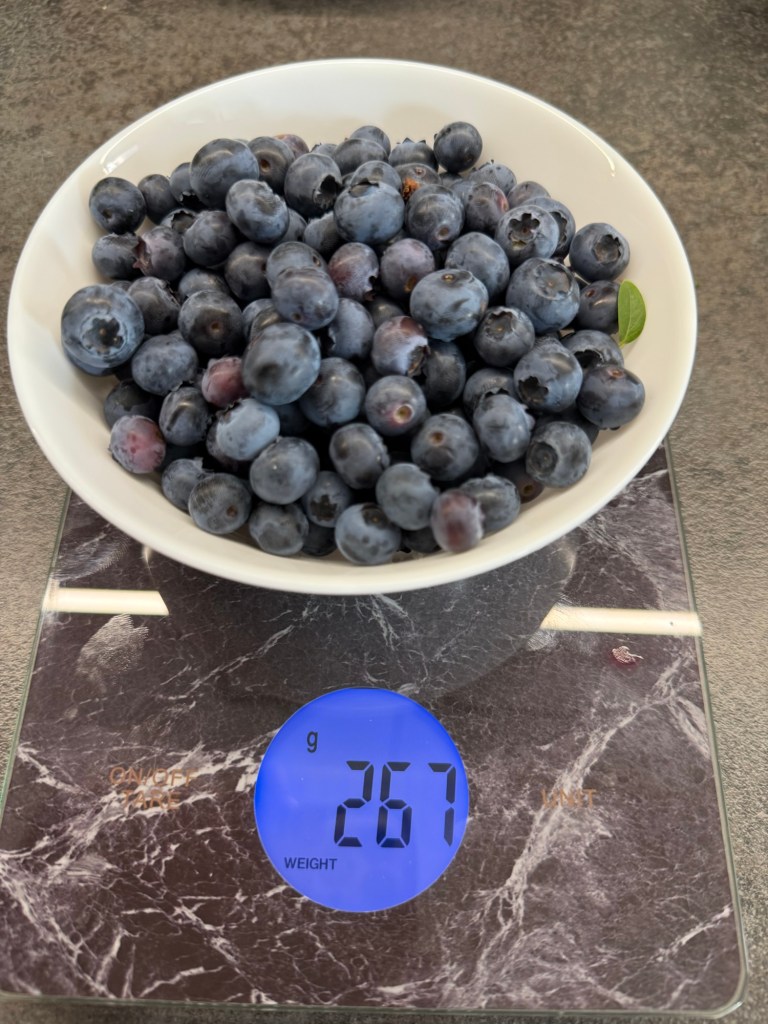
One harvest weighed 267 grams. This was only one picking, not the total harvest for the season.
Sunlight Made a Clear Difference
All of the blueberry bushes survived the winters, but they did not produce equally well.
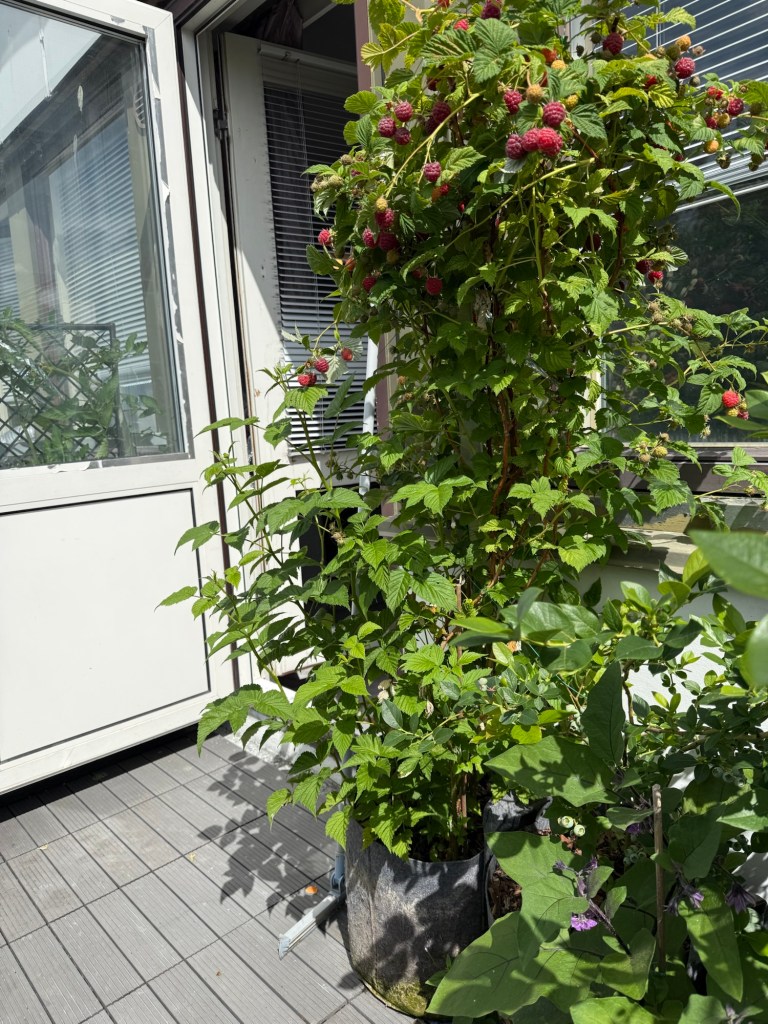
The two bushes receiving more direct sunlight produced considerably more berries. Another bush was partly shaded by my raspberry plant and produced much less.
This showed me that keeping a blueberry bush alive is not the same as giving it the best conditions for fruit production. On my balcony, the amount of sunlight appears to have had a major effect on the harvest.
The Unexpected Soil pH Result
Blueberries normally prefer strongly acidic soil, usually around pH 4.5–5.5.
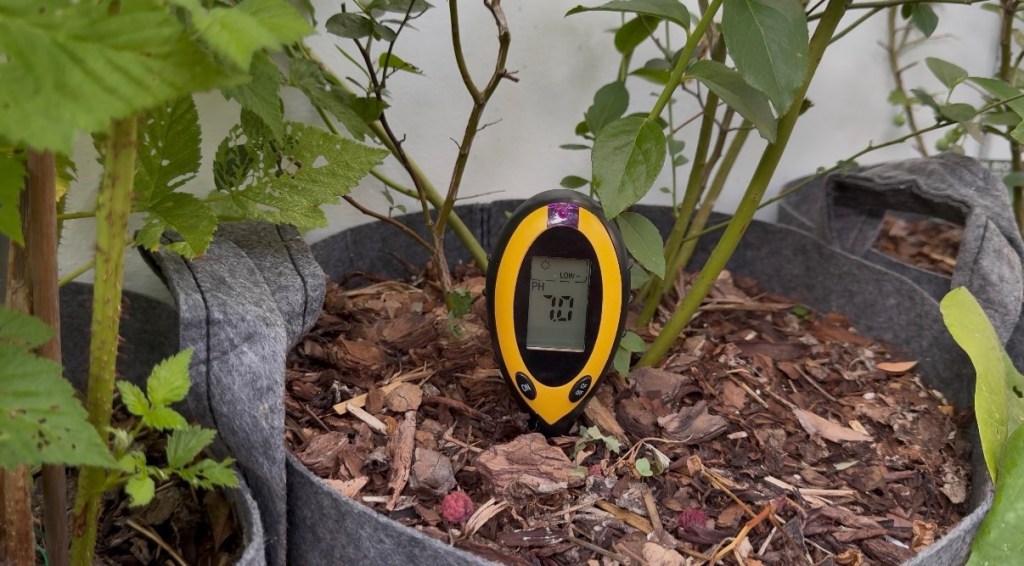
When I tested the soil in my fabric pots, the result was around pH 7. That is much higher than the recommended range for blueberries.
A home soil test is not as accurate as a laboratory analysis, so I do not want to draw conclusions from one measurement alone. However, the result was high enough to take seriously.
The fact that the plants produced berries does not mean that a neutral pH is ideal for them. They may still grow and produce while the conditions are gradually becoming less suitable.
I plan to test the soil again and monitor the new growth, leaf colour and future harvests more carefully.
What I Added in Spring
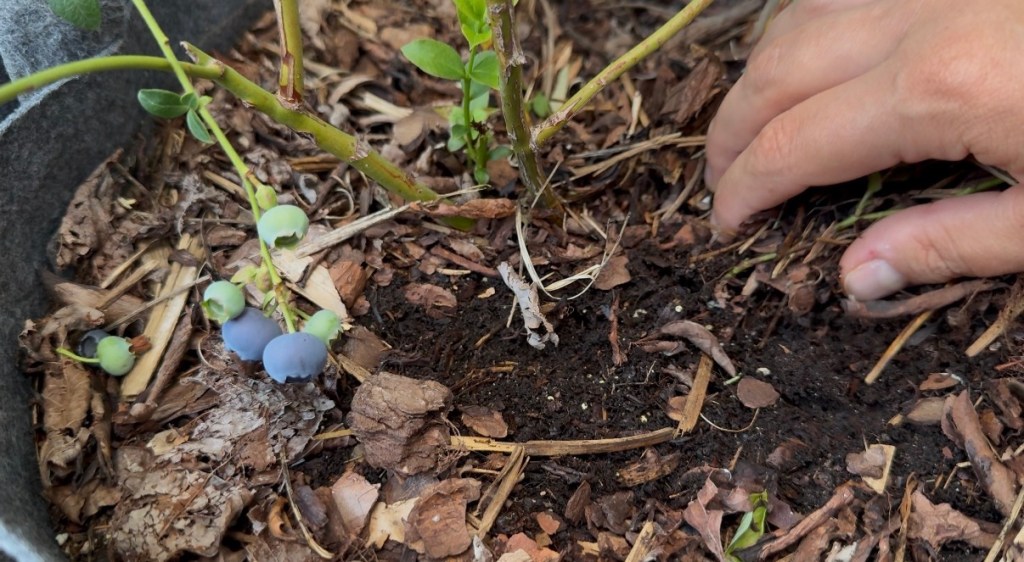
By spring, the level of soil in the fabric pots had dropped.
I added a fresh surface layer containing potting mix, perlite and some vermicompost. I also used a water-soluble fertilizer during the growing season.
The fresh material restored some of the missing soil volume and added nutrients. However, general potting mix and vermicompost do not necessarily help maintain the strongly acidic conditions that blueberries prefer.
This is why testing the soil can be useful even when the plants still appear healthy.
What Worked
Several parts of this experiment have worked well:
- The blueberry plants survived three Finnish winters outside.
- The fabric pots remained usable throughout the experiment.
- Bark mulch helped cover the soil and reduce moisture loss.
- Leaves and snow provided some winter protection.
- Regular watering supported the plants during warm weather.
- The bushes in the sunnier location produced the strongest harvest.
What I Would Change
There are also several things I would manage differently:
- I would monitor the soil pH more regularly.
- I would avoid allowing taller plants to shade the blueberry bushes.
- I would consider the effect on soil acidity before adding general potting mixes or compost.
- I would continue comparing the plants over several growing seasons.
Are Fabric Pots a Good Choice for Blueberries?
After three winters, I consider this experiment successful, but it is not finished.
The fabric pots did not prevent the blueberry plants from surviving cold Finnish winters. The bushes grew from tiny plants into productive container-grown blueberries.
However, winter survival was not the only factor that mattered. Sunlight, regular watering and long-term soil acidity all influenced the result.
My next step is to improve the soil conditions and see whether this affects the growth, leaf colour and berry production during the following seasons.
Would You Change Something That Already Works?
The pH reading suggests a problem, but the plants seem to tell a different story. Take a closer look in the video.
If you enjoy real indoor and balcony growing experiments, you can subscribe to my YouTube channel to follow what happens to these blueberry plants next.


 Infinite Gardening
Leave a comment