

I keep compost worms in my closet.
It may sound strange at first, but I have kept a single worm bin indoors for several years. It does not take up much space, and one bin is enough for my indoor and balcony garden.
The worms process some of my kitchen scraps together with cardboard and gradually turn them into dark, crumbly worm compost. I then use it as a soil amendment for plants growing in containers.
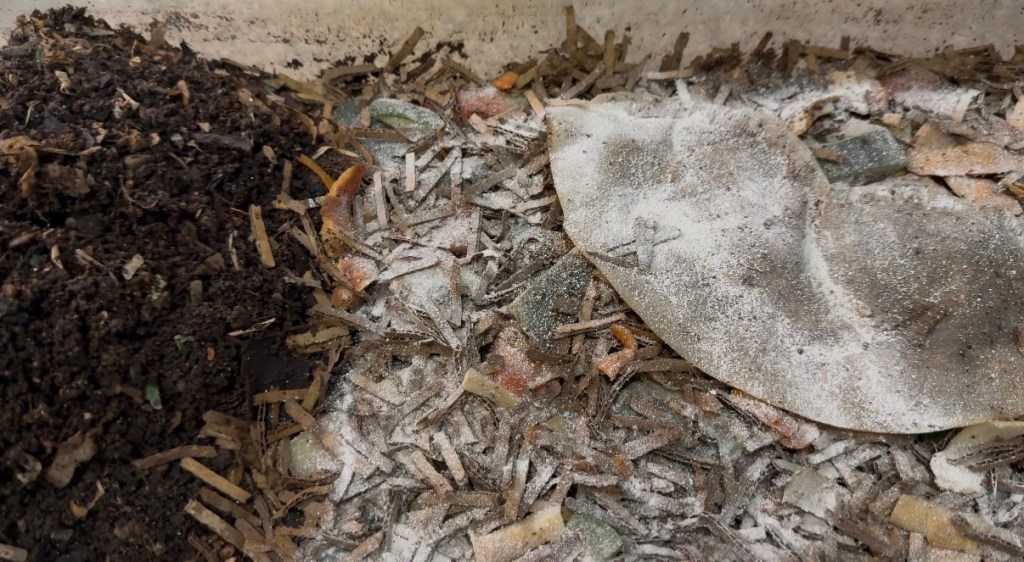
Why Keep a Worm Bin Indoors?
Traditional composting is not always possible when you live in an apartment. A worm bin offers a much smaller alternative that can operate throughout the year.
A healthy worm bin should smell earthy rather than rotten. The worms also stay inside the bedding, so the bin is much less dramatic than many people imagine.
My bin stays in a closet, where it is dark and protected from direct sunlight. However, the container still needs ventilation and should never be completely airtight.
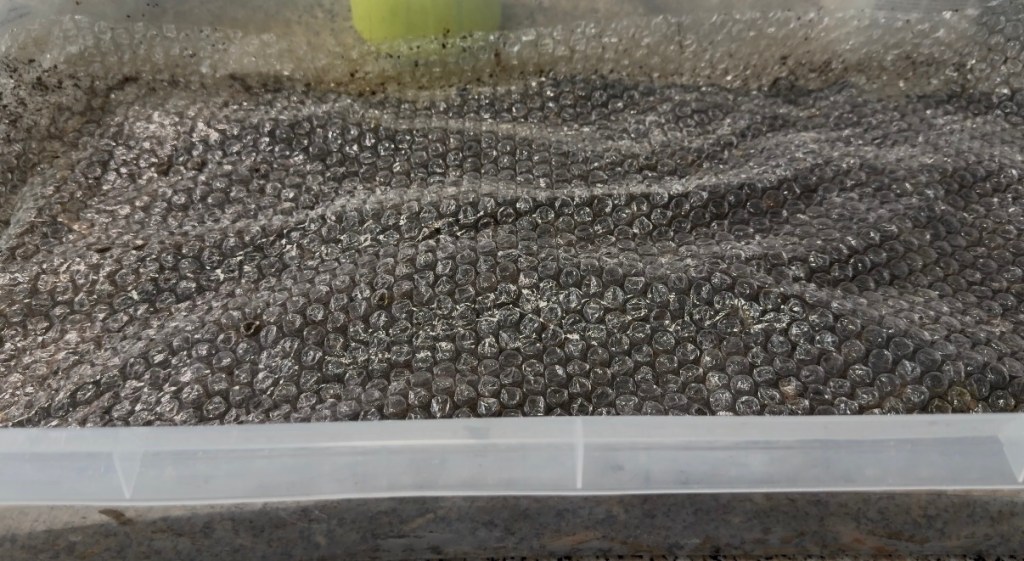
What Compost Worms Need
A worm bin needs four basic things:
● Moist bedding
● Air
● Suitable food
● A stable indoor temperature
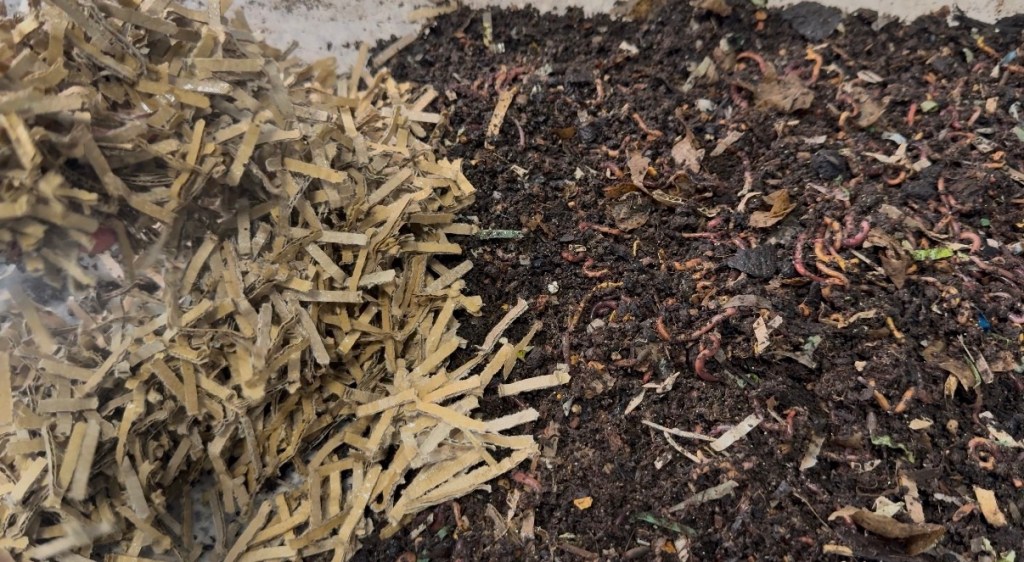
I use shredded plain cardboard as an important part of the bedding. Cardboard absorbs extra moisture, creates air pockets and gives the worms a place to live between feedings.
The bedding should feel damp, similar to a wrung-out sponge. It should not be dripping wet or completely dry.
Composting worms such as red wigglers are used for worm bins. Ordinary earthworms collected from garden soil are not suited to the same conditions.
What I Feed My Worms
My basic feeding method is simple: I add small amounts of kitchen scraps and regularly add shredded cardboard.
Suitable foods include:
● Vegetable and fruit scraps
● Wilted lettuce and herbs
● Coffee grounds in moderate amounts
● Paper coffee filters
● Plastic-free tea leaves or tea bags
● Finely crushed eggshells
● Small amounts of plain bread or cereal
Cutting or breaking scraps into smaller pieces helps them decompose more quickly.
Cardboard is added alongside the food. I use plain, uncoated cardboard without plastic tape, glossy printing or shipping labels.
Foods I Avoid
Some foods are more likely to create smells, excess acidity or pest problems.
I avoid adding:
● Meat, fish and bones
● Dairy products
● Oils and greasy foods
● Salty or heavily seasoned cooked food
● Pet waste
● Large amounts of citrus peel
● Large amounts of onion or garlic
A small worm bin cannot process unlimited amounts of food. It is better to start with too little than to add too much at once.
My Simple Feeding Routine
I pull aside some bedding, place the food underneath and cover it completely with cardboard and existing bedding.
The next feeding goes into a different part of the bin. This distributes the food and makes it easier to see which areas the worms have already processed.
Before adding more, I check whether most of the previous food has disappeared. If scraps remain untouched, I wait longer.
Covering food carefully is one of the most important ways to prevent fruit flies.
Preventing Smells and Flies
A properly maintained worm bin should not produce a strong smell. A bad smell usually means that the bin contains too much food, too much moisture or too little air.
When the bin becomes too wet, I add more dry shredded cardboard. If food is building up, I stop feeding until the worms have caught up.
Other useful habits include:
● Burying every feeding under the bedding
● Keeping the lid and ventilation openings in place
● Removing food that remains untouched for a long time
● Freezing and thawing scraps before feeding if fruit flies are a problem
● Avoiding large piles of wet fruit
The worms do not need to be fed according to a strict schedule. The condition of the bin is more important than the day of the week.
Using the Finished Worm Compost
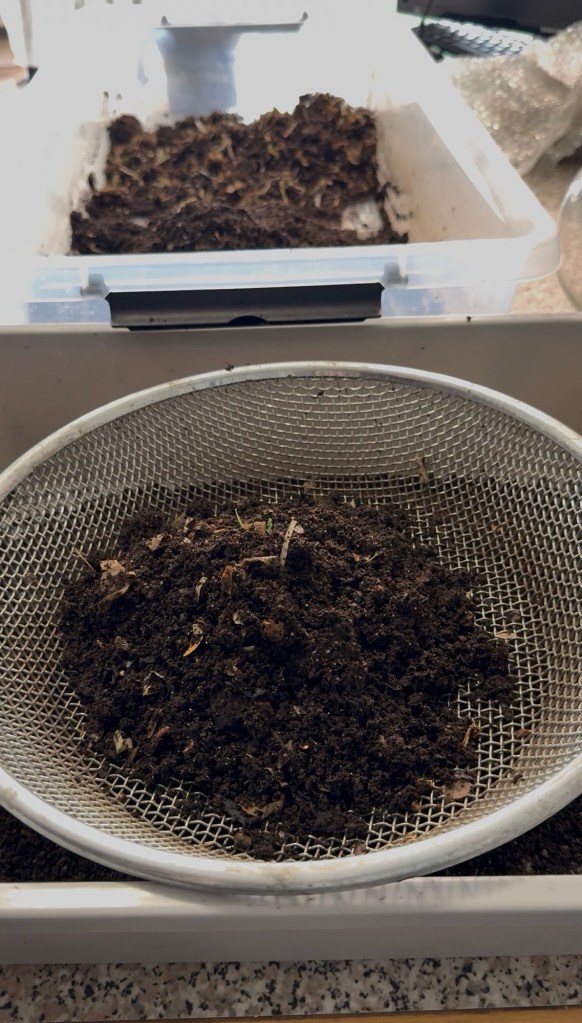
Finished worm compost is dark, crumbly and has an earthy smell. I use it for plants growing indoors and on my balcony.
It can be mixed with potting soil or added as a thin top dressing around established plants. Because worm compost is concentrated, I do not replace all the potting soil with it.
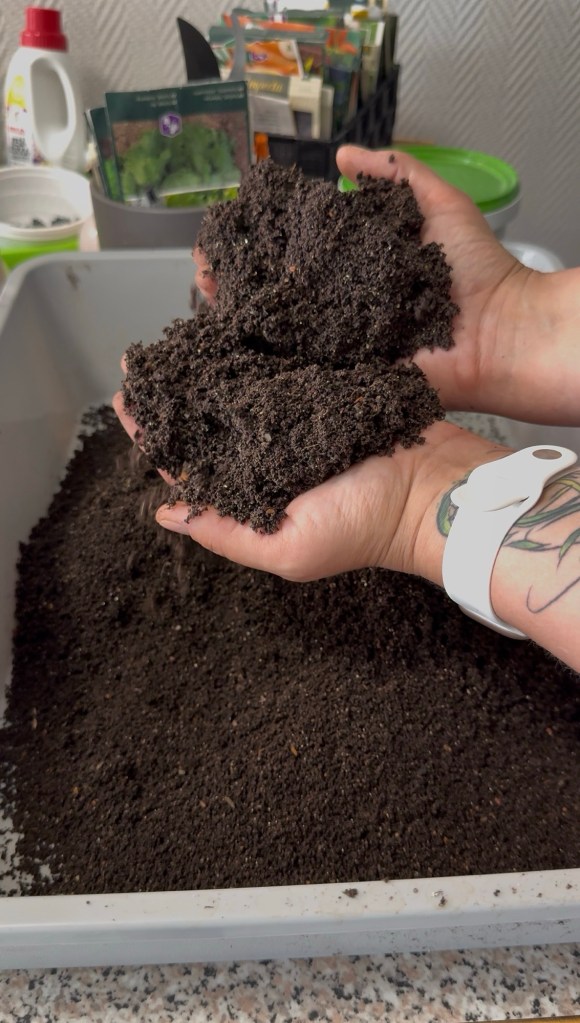
When harvesting, one simple method is to move the old material to one side of the bin and place fresh bedding and food on the other side. Over time, most of the worms migrate towards the new food, making the finished compost easier to collect.
I remove as many worms as possible before using the compost in indoor pots. The worms belong in the moist composting bin rather than in small plant containers.
Is an Indoor Worm Bin Worth It?
For me, one worm bin is enough.
It quietly processes part of my kitchen waste, uses cardboard that would otherwise be discarded and produces a useful soil amendment for my plants. It does not require a garden, a large compost pile or several containers.
It is not the most glamorous part of indoor gardening, but it is one of the most practical systems in my home.


Leave a Reply